


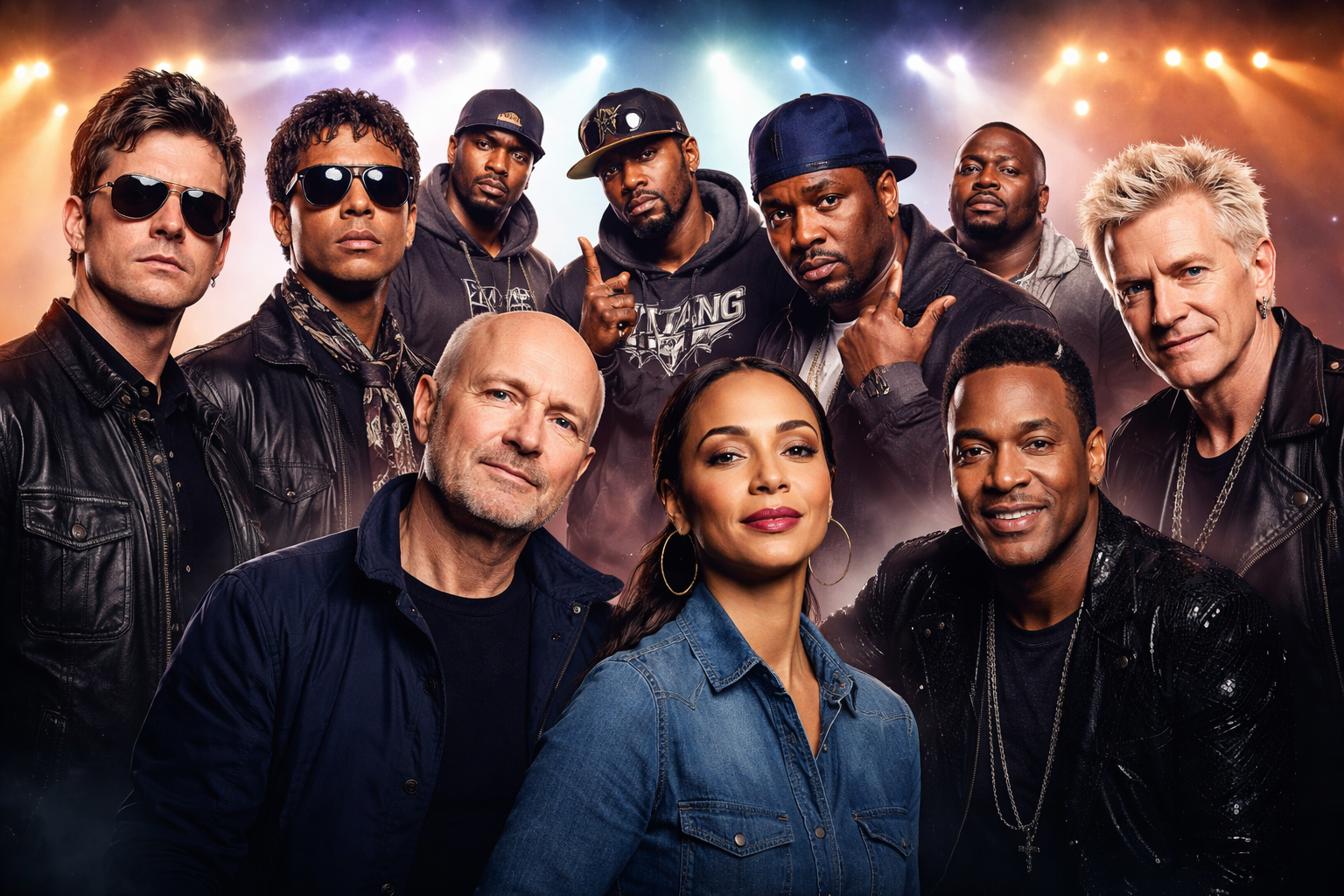
Introduction: A Defining Year for the Rock Hall
The Rock and Roll Hall of Fame has unveiled its Class of 2026, and the message is unmistakable. This is not just a celebration of rock music, it is a recognition of global culture, genre fusion, and decades of influence that stretch far beyond guitars and amplifiers.
From the anthemic Britpop of Oasis to the revolutionary hip-hop legacy of Wu-Tang Clan, and the enduring metal dominance of Iron Maiden, this year’s inductees represent a turning point.
For fans, critics, and industry insiders, the Class of 2026 is more than a list. It is a cultural reset.
Full List of Rock & Roll Hall of Fame 2026 Inductees
Performer Category


The headline performers inducted this year include:
- Oasis
- Wu-Tang Clan
- Iron Maiden
- Phil Collins
- Sade
- Billy Idol
- Luther Vandross
- Joy Division / New Order
This list reflects a bold shift. Genres that once existed on the fringes of “rock” are now central to its identity.
A New Definition of Rock and Roll
For decades, the Rock Hall faced criticism for being too narrow in its definition of rock. The 2026 class challenges that notion head-on.
The inclusion of Wu-Tang Clan underscores how hip-hop has shaped modern music as profoundly as any guitar-driven movement. Their lyrical complexity, cultural influence, and business model redefined the industry.
Similarly, Luther Vandross brings soul and R&B into sharper focus, highlighting how vocal artistry and emotional storytelling are core to music’s evolution.
Meanwhile, Iron Maiden represents the global power of heavy metal, a genre long overlooked despite its massive fanbase and influence.
This is no longer about fitting artists into a box. It is about acknowledging impact.
Oasis Finally Gets Its Moment


Few bands defined the 1990s like Oasis.
With era-defining albums like (What’s the Story) Morning Glory?, the Manchester band became a global phenomenon. Their induction comes after years of eligibility and persistent fan demand.
The Gallagher brothers, Liam and Noel, built a legacy on swagger, melody, and cultural impact. From Knebworth to Wembley, their concerts were more than performances, they were generational events.
Their inclusion feels overdue, but also perfectly timed.
Wu-Tang Clan: Hip-Hop’s Cultural Architects


The induction of Wu-Tang Clan is a landmark moment.
Emerging from Staten Island in the early 1990s, the group revolutionised hip-hop with their raw production, martial arts imagery, and collective business model. Albums like Enter the Wu-Tang (36 Chambers) are widely regarded as masterpieces.
More than music, Wu-Tang created a movement. Their influence spans fashion, entrepreneurship, and global hip-hop culture.
Their place in the Hall confirms what fans have long argued: hip-hop is not an outsider, it is central to modern music history.
Iron Maiden Breaks Through After Years of Snubs


For years, fans of Iron Maiden questioned their absence from the Hall.
Now, that debate is over.
With a career spanning more than four decades, Iron Maiden helped define heavy metal with complex compositions, theatrical performances, and a fiercely loyal global fanbase.
Their mascot, Eddie, is one of the most recognisable symbols in music.
This induction is not just a win for the band. It is a victory for metal as a whole.
Phil Collins, Sade, and the Power of Longevity


Veteran artists also take centre stage in 2026.
Phil Collins, already a towering figure from his time with Genesis, is recognised for his solo legacy. Hits like In the Air Tonight remain timeless.
Sade brings a different kind of influence, smooth, understated, and globally adored. Her sound shaped decades of soul, jazz, and pop.
Together, they represent longevity, consistency, and artistic identity.
Honouring Global Influence: Beyond the Performer Category


The Hall’s Early Influence category highlights artists whose impact transcends borders:
- Fela Kuti
- Celia Cruz
- Queen Latifah
- MC Lyte
- Gram Parsons
This is where the Rock Hall’s evolution becomes most visible.
Recognising Fela Kuti is particularly significant. His Afrobeat sound influenced generations of artists worldwide, blending jazz, funk, and traditional African rhythms into a politically charged musical force.
Behind the Scenes: Industry Icons Recognised
The 2026 class also honours those who shaped music from behind the curtain.
- Rick Rubin receives the Musical Excellence Award
- Linda Creed is also recognised
- Ed Sullivan receives the Ahmet Ertegun Award
From production to songwriting to television, these figures helped bring music to the masses.
The Biggest Snubs of 2026
No Rock Hall announcement is complete without controversy.
High-profile omissions include:
- Mariah Carey
- Lauryn Hill
- Shakira
Each artist has a strong case, commercially, critically, and culturally.
Their absence is already fuelling debate online, and likely strengthens their chances in future ballots.
When and Where Is the 2026 Ceremony?
The official induction ceremony will take place in Los Angeles in November 2026, bringing together legends across generations for one of music’s most anticipated nights.
Expect live performances, emotional speeches, and historic collaborations.
Why the 2026 Class Matters for the Future of Music
This year’s inductees reflect a deeper truth about the industry:
- Music is global
- Genres are fluid
- Influence matters more than labels
The Rock Hall is no longer just preserving history. It is redefining it.
By embracing hip-hop, Afrobeat, metal, and soul alongside traditional rock, the institution is aligning itself with how audiences actually experience music today.
Final Thoughts
The Rock & Roll Hall of Fame Class of 2026 is bold, overdue, and deeply symbolic.
It honours legends, corrects past omissions, and expands the definition of what it means to be part of rock history.
For fans, it is validation.
For artists, it is recognition.
For the industry, it is evolution.
And for music itself, it is a reminder that great art always finds its place, no matter the genre.