


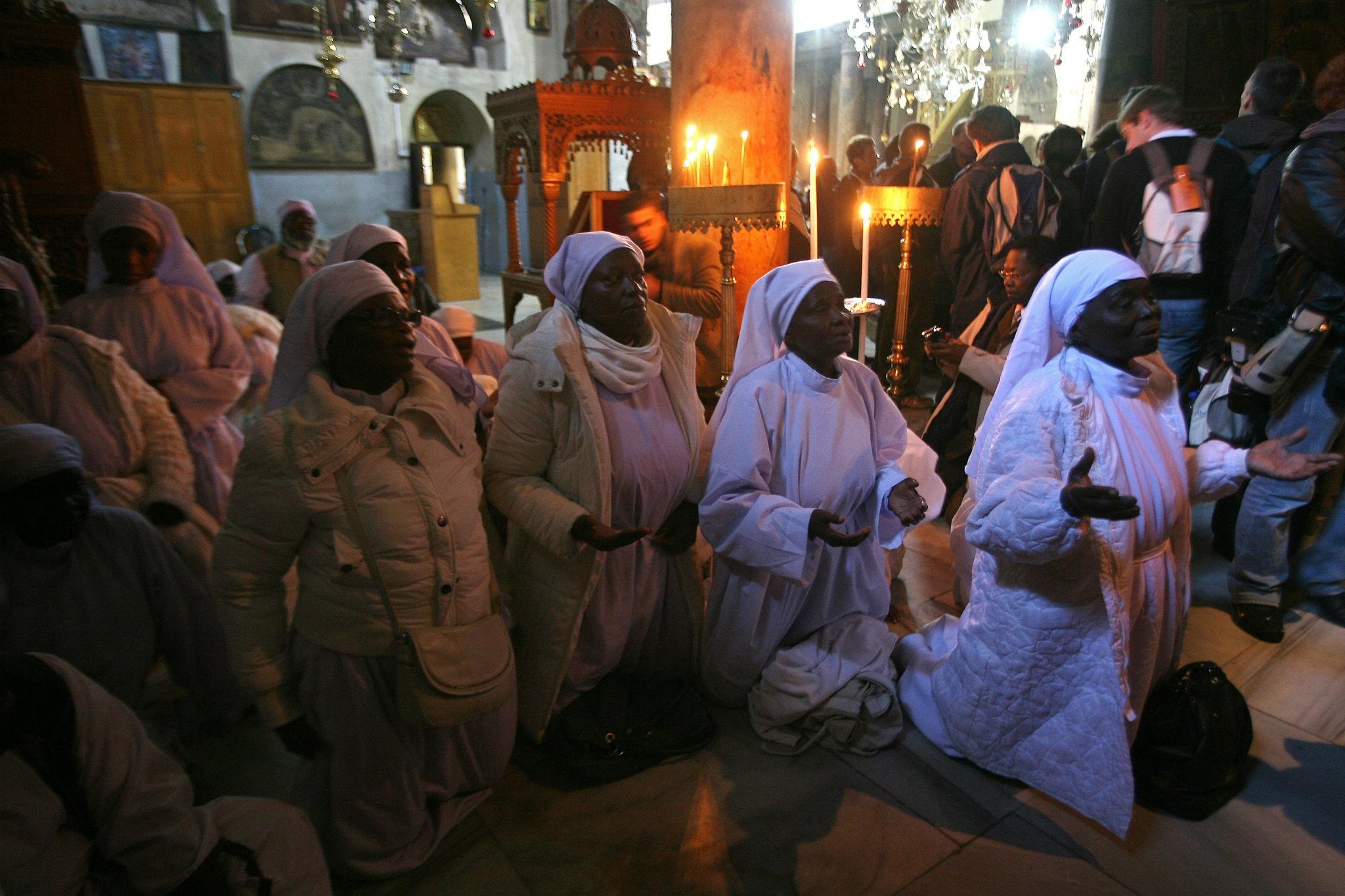
The Kaduna State Government has officially revived its Christian pilgrimage programme after an 11-year suspension, marking a significant development in the state’s religious and social policy. Fifty intending Christian pilgrims are set to embark on the journey under full government sponsorship, a move widely viewed as a step toward inclusive governance and religious harmony in Kaduna.
The announcement was made during the 2025 orientation programme organised for the selected pilgrims. The revival of the Kaduna Christian pilgrimage scheme has been welcomed by Christian leaders and stakeholders, who described it as a strong signal of fairness, equity, and balanced leadership in a religiously diverse state.
Speaking at the orientation event, the Head of Service, Jimami Bako, commended Uba Sani for restoring the state-sponsored Christian pilgrimage.
Bako said the decision reflects a broader understanding of governance, one that goes beyond infrastructure projects and economic reforms. According to him, leadership must also recognise the spiritual wellbeing of citizens as part of holistic development.
“This administration understands that governance is not limited to roads and physical infrastructure. It also involves supporting the spiritual growth of the people,” he stated.
The Kaduna Christian pilgrimage programme, which had remained inactive since 2014, is now being repositioned as part of the state government’s effort to promote religious inclusion and social cohesion.
The Commissioner for Information, Ahmed Maiyaki, described the revival as proof of the government’s commitment to justice, fairness, and inclusiveness in Kaduna State.
He urged the 50 intending pilgrims to use the opportunity to pray for peace, unity, and sustained prosperity in both Kaduna State and Nigeria. According to Maiyaki, the pilgrimage is not only a personal spiritual journey but also an opportunity to represent the state and country positively.
Observers note that the resumption of the Kaduna Christian pilgrimage scheme may help strengthen trust between the government and Christian communities across the state. Kaduna has long been regarded as one of Nigeria’s most religiously sensitive states, making policies that encourage peaceful coexistence particularly significant.
For many beneficiaries, the return of state-sponsored Christian pilgrimage in Kaduna signals renewed confidence in the administration. Community leaders have described the development as a boost to peaceful coexistence between Christians and Muslims in the state.
Religious stakeholders say initiatives like this contribute to stability by ensuring that no group feels marginalised in government programmes. The decision to sponsor 50 Christian pilgrims in 2025 is seen as a symbolic but meaningful gesture aimed at reinforcing unity.
The pilgrimage programme is expected to include visits to holy sites in Israel, a traditional destination for Nigerian Christian pilgrims. The spiritual exercise is often regarded as a life-changing experience for participants, deepening their faith and strengthening their connection to biblical history.
Records show that the last state-sponsored Christian pilgrimage from Kaduna took place in November 2014. At the time, 567 pilgrims were airlifted from the state airport to Israel under the administration of former governor Mukhtar Ramalan Yero.
Before their departure, Yero urged the pilgrims to conduct themselves as worthy ambassadors of Nigeria while in the Holy Land. Since then, the programme had remained suspended until the latest announcement restoring it.
The 11-year gap had generated concerns among Christian groups in the state, especially as other religious pilgrimage activities continued in various forms. The 2025 revival is therefore being interpreted as a corrective step aimed at balancing state-sponsored religious initiatives.
Analysts say the resumption of the Kaduna Christian pilgrimage programme could have broader political and social implications. In a state often defined by religious diversity, policies that promote inclusion tend to resonate strongly with citizens.
By restoring the Christian pilgrimage scheme after more than a decade, the Kaduna State Government appears to be sending a message about equal opportunity and shared citizenship. Supporters argue that such initiatives can reduce tensions and reinforce the idea that governance should reflect the interests of all residents.
As the 50 pilgrims prepare for their journey, attention will likely focus on how the programme is sustained in future years. For now, the revival marks a notable chapter in Kaduna’s religious and administrative history, combining faith, governance, and public policy in a single decision that has drawn widespread attention.