


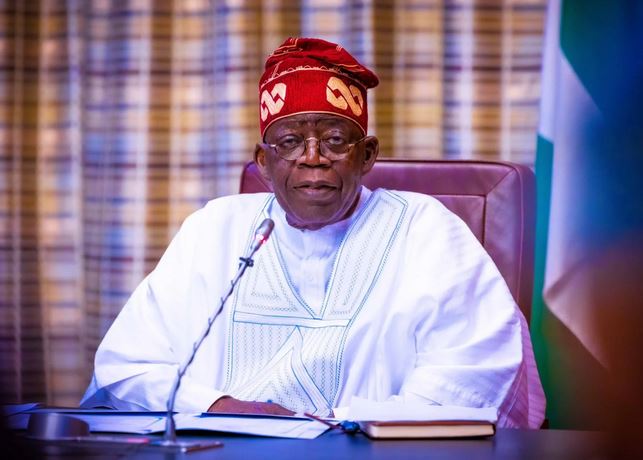
State governments will now bear the cost of electricity subsidy alongside the Federal Government, following a directive by President Bola Tinubu.
News360 Info understands that funding for the subsidy will now be sourced from the Power Assistance Consumers Fund (PCAF).
The PCAF is a government-backed financial pool created to subsidise electricity bills for low-income and vulnerable households, ensure affordability amid rising tariffs and stabilise the power sector through targeted support rather than blanket subsidies.
More than 18 states are currently operating their own electricity regulatory agencies, with others preparing to do the same.
The states include Lagos, Ondo, Osun, Ekiti, Edo, Delta, Bayelsa, Akwa Ibom, Cross River, Abia, Anambra, Imo, Kogi, Niger, Nasarawa, Plateau, Gombe and Jigawa.
The directive was disclosed by the Director-General of the Budget Office of the Federation, Tanimu Yakubu, at the opening of the 2026 Post-Budget Preparation Workshop on the Government Integrated Financial Management Information System (GIFMIS) in Abuja on Tuesday.
Yakubu said state governments that enjoyed the political benefits of electricity subsidy must also share in funding the gap created by the subsidy and not leave the burden to the Federal Government alone.
Speaking in an address read on his behalf by the Director of Expenditure Social, Mr Yusuf Muhammed, he said, “Mr President has directed that we operationalise a clearer framework to share the cost of electricity across the federation, so the burden is not treated as an open-ended fiscal residual. I mean federal residual. Let me be direct.
“If you want a stable power sector, we must pay for the choices we make. When tariffs are held low cost, a gap is created. That gap is a subsidy, and a subsidy is a bill.”
FG Won’t Carry Electricity Subsidy Alone From 2026
Yakubu stressed that from 2026, electricity subsidy would no longer be treated as the sole responsibility of the Federal Government.
“In 2026, we will stop pretending that this bill can be left to the Federal Government alone, especially where the policy choice or the political benefit is shared across tiers of government.
“Mr President directed us to invoke the electricity sector legal framework to make burden-sharing practical and transparent,” he said.
He explained that the new framework would ensure subsidy costs were clearly identified, tracked and funded.
“This means subsidy costs must be explicit, tracked and funded, so they do not return as arrears, liquidity crisis or hidden liabilities in the market.
“It also means that if any tier of government chooses affordability intervention, the responsibility must be clear, agreed and enforceable. This is not punishment. It is an alignment,” he added.
According to him, cost-sharing would incentivise efficiency and targeted protection for vulnerable consumers.
“When everyone carries a fair share of the cost, everyone also has an incentive to support cost-effective, efficiency-targeted protection for the vulnerable, and empower a market that can actually deliver for MDAs,” he said.
Make Subsidy Costs Visible In Budgets – FG
The Budget Office boss urged states and MDAs to reflect subsidy-related costs transparently in their fiscal plans.
“The implication is simple: make subsidies-related costs visible in your planning and submission. Do not push liabilities into the market as arrears or unfunded commitments. Support transparent, rule-based attribution and financing of affordability decisions,” he said.
Yakubu also disclosed that President Tinubu had directed the Budget Office and MDAs to review the Fiscal Responsibility Framework to make fiscal rules more dynamic and enforceable.
“Fiscal rules are not a slogan; they are the guardrails of government. Without guardrails, spending becomes impulsive, debt becomes casual, and the budget becomes a statement of intent rather than a tool of delivery,” he said.
He explained that the 2026 budget direction was to modernise fiscal rules rather than abandon them.
“That means clearer fiscal anchors, better-defined escape clauses for genuine shocks, and a credible path back to compliance when those clauses are used,” Yakubu said.
The D-G added that capital proposals in the 2026 budget must be delivery-ready and, where necessary, finance-ready.
“A long list of projects is not a development strategy. It is often a map of disappointment. What citizens feel is delivery — completed roads, reliable power, functional schools and working hospitals,” he said.
He noted that the government was shifting from merely naming projects to financing and delivering them.
“It means prioritisation: fewer projects, better funded, better delivered. If we do this, the budget becomes a pipeline of completion, not a catalogue of unfinished work,” he said.
Governors, Regulators React Cautiously
Reacting to the development, the Director of Media and Communications of the Nigerian Governors’ Forum, Yunusa Abdullahi, said the forum was still reviewing the directive.
“We are reviewing the context and content of the information. We will not be making further comments on it,” he said.
Similarly, State Electricity Regulatory Commissions in Lagos, Imo, Enugu, Ekiti, Oyo, Ondo, Edo, Niger and Anambra held an emergency virtual meeting to review the situation.
A member of the commission, who spoke to journalists anonymously, said, “We cannot make our official position known immediately. We are hearing it for the first time and currently meeting to review it.
“The government has taken steps in recent times to stimulate the sector by deregulating activities and making states play active roles, but we need to interrogate this decision and understand its implications for the states and the entire power sector.”
States Must Step In – CPPE
On his part, the Chief Executive Officer of the Centre for the Promotion of Private Enterprises, Dr Muda Yusuf, said state governments must be ready to play more active roles in the power sector, including sharing the burden of electricity subsidy as key stakeholders.
Yusuf said the proposed cost-sharing arrangement was not fundamentally different from what existed during the petrol subsidy era, when states indirectly paid for subsidies through reduced allocations from the Federation Account.
He said, “This model is not different from the model we had with the first subsidy. You know the first subsidy, all the states and local governments that had anything to do with FAAC allocation are paying for it because the NNPC which was supposed to be remitting to the federation account was not remitting, so all the states were paying for it.”
Yusuf recalled that when petrol subsidy was removed, remittances improved and states’ revenues increased.
“When the first subsidy stopped, NNPC was able to remit a lot more and the states were getting more revenue, so I believe the same scenario is about to play out with regard to electricity subsidy,” he said.
The CPPE boss warned that electricity subsidy obligations had continued to grow rapidly, making it increasingly difficult for the Federal Government to carry the burden alone.
“The numbers are getting bigger and bigger by the day. The last time we were told that the GENCOs and the gas suppliers were owed about five trillion naira. The Federal Government had to issue a bond to that effect, and that was as at June or September last year,” he said.
According to him, the debt figure would have increased significantly since then.
Yusuf noted that although the subsidy regime was unsustainable, the political climate made immediate reforms difficult.
“A subsidy regime that is difficult for the Federal Government alone to continue to carry is not sustainable, but it is not politically feasible to tamper with that subsidy regime as we speak,” he said.
He explained that Nigerians were yet to recover from the impact of earlier economic reforms, making further adjustments sensitive.
“The citizens are yet to recover from earlier reforms and their implications on real income and welfare,” he said.
Yusuf added that the electricity value chain was deeply interconnected.
“We are in a pre-election year, so this is another cross the government will have to carry. From gas suppliers to generators, transmitters and distributors, this is a strongly linked chain. Once there’s a break in the chain, the electricity system goes down,” he warned.
While stressing that the sector needed deeper reforms, he admitted progress might be slow.
“It’s a sector that needs more rigorous, fundamental reforms, but I am not sure those reforms can move as quickly as we desire at a time like this,” he said.
Electricity Subsidy Sharing Inevitable – Yusuf
Yusuf concluded that the decision to involve states in electricity subsidy funding appeared inevitable.
“This is a major policy concern. But for me, I think the decision is almost inevitable, given the rate at which electricity subsidy has been growing. Cost-reflective tariffs are being discussed, but I don’t think that is feasible at this time. That is the challenge,” he said.
Also speaking, Prof Wumi Iledare of the FUPRE Energy Business School and Executive Director of the Emmanuel Egbogah Foundation described the move as a significant fiscal and political development.
“This is a big fiscal and political shift. It’s basically saying electricity subsidy is no longer just a federal burden; states must now share the cost,” he said.
While noting that the policy aligned with recent electricity reforms that gave states more authority, Iledare said it raised critical questions.
“How will the sharing formula work? Poorer states can’t carry the same load as richer ones. Can states even afford this without creating new debts? And what incentives does this create?” he queried.
He added that co-payment could drive reforms.
“If states must co-pay, they will likely push faster toward realistic tariffs, targeted subsidies and local power investments,” he said.
According to him, the outcome would depend on how the framework was designed.
“This could either deepen the crisis or finally force more discipline and accountability in electricity financing. The outcome depends on whether the framework is transparent and rules-based, not political bargaining,” Iledare said.
However, a legal practitioner and Lead Consultant at Sage Consulting on Power Sector Advocacy and Advisory, Bode Fadipe, according to Vanguard, expressed reservations over how the policy would be enforced.
Fadipe argued that the electricity subsidy remained a federal decision and questioned the Federal Government’s constitutional authority to compel states to contribute.
“That is a serious issue when you are asking states to take on part of the subsidy. What will be the basis? Will it be based on what states consume or what their indigenes consume?” he asked.
He said it was unclear how states could assume responsibility for a system they did not fully control.
“It is hazy to start conjecturing how states will handle this when it is not their facility that conveys the energy we are talking about,” he said.
Fadipe also referenced last year’s controversy involving the Enugu Electricity Regulatory Commission.
“The wholesale market remains a federal government market. Any decision for states to pay 10 or 20 per cent would have to be voluntary. It cannot be by federal directive,” he said.
He added, “The Enugu issue is clear. Enugu could not ask for a subsidy on a product it does not control. If it wants to do so, it must be prepared to pay the differential.”
FAAC Deductions May Spark Conflict – Expert
An electricity market expert, Lanre Elatuyi, said the Federal Government could only enforce such a policy through direct deductions from states’ allocations via the Federation Account Allocation Committee (FAAC).
However, he warned that this could trigger disputes.
“States will need accurate data on the volume of electricity consumed within their jurisdictions,” he said.
Elatuyi added that while it was fair for states to contribute, flexibility was crucial.
“The level of debt in the power sector has shown that the Federal Government alone can no longer shoulder the burden. States can decide the percentage of subsidy they are willing to pay, especially since the Electricity Act empowers them to establish and regulate their own electricity markets,” he said.