


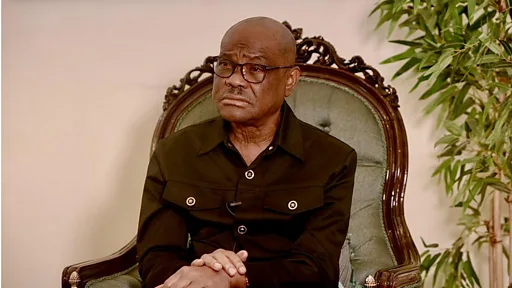
Why Wike May Not Have a Party in 2027
Politics in Nigeria has never been tidy. Alliances form quickly, collapse just as fast, and loyalties often follow power more than party ideology. Few politicians embody this reality better than Nyesom Wike.
Once one of the loudest and most influential figures in the Peoples Democratic Party (PDP), Wike today sits in the cabinet of a government led by the All Progressives Congress (APC). He insists he is still PDP. His critics insist he is not. His supporters say he is bigger than party labels. And somewhere in the middle of all this confusion lies a serious question, what exactly will Wike’s political platform be in 2027?
Increasingly, the honest answer may be none.
This is not about technical party membership. It is about political belonging, trust, and where Wike realistically fits as Nigeria heads toward the next general election.
From Party Man to Political Lone Ranger
For years, Wike was PDP to many Nigerians. He funded the party, fought its battles, and used his influence to shape internal outcomes. His role in Rivers State politics made him untouchable within the party structure.
That image cracked during the 2023 election cycle.
His open rebellion against the PDP presidential candidate, Atiku Abubakar, and his decision to work with Bola Tinubu marked a turning point. Wike framed it as a protest against injustice within PDP. Others saw it as personal ambition colliding with party loyalty.
Whatever interpretation one chooses, the result is clear. Wike burned bridges inside PDP. Many of the party’s power brokers no longer trust him. Grassroots members who once defended him now question his commitment.
A party without trust is not a home. And PDP increasingly looks like a house that no longer has space for Wike.
APC Is a Shelter, Not a Home
Wike’s appointment as Minister of the Federal Capital Territory under an APC-led government gave him power, relevance, and national visibility. But it did not give him ownership.
APC is a party with its own long-standing heavyweights. Tinubu has loyalists who have waited decades for their turn. Governors, former governors, party financiers, and regional leaders all see 2027 as their moment.
Wike is, at best, a useful ally.
At worst, he is a temporary guest.
He did not build APC. He does not control its structures. He has no deep grassroots base inside the party outside Rivers State. When succession battles intensify, APC insiders will likely close ranks around their own.
Political history in Nigeria shows that ruling parties rarely hand over their ticket to outsiders, no matter how influential.
So while Wike may enjoy cabinet power today, that does not automatically translate into a secure political future within APC.
The Rivers State Factor
Wike’s strength has always come from Rivers State. But even there, his grip is not as firm as it once was.
His successor, Governor Siminalayi Fubara, has gradually built an independent base. The political tension between both camps has been visible, sometimes publicly, sometimes quietly. Power in Rivers is no longer a one-man affair.
If Wike cannot command unquestioned loyalty at home, his bargaining power nationally weakens.
In Nigerian politics, governors matter. Structures matter. Numbers matter.
A man without solid state control walks into national negotiations with less leverage.
Too Big to Submit, Too Isolated to Lead
This is where Wike’s biggest problem lies.
He is too powerful to accept being a junior figure inside another man’s political empire. But he is also too isolated to successfully build a new national coalition on his own.
Creating a viable party from scratch requires massive funding, nationwide structures, and alliances across regions. It also requires time and patience. Wike has money, but money alone does not replace political trust.
Most politicians already belong to parties where they have invested years of loyalty. Convincing them to abandon those platforms for a Wike-led movement would be extremely difficult.
As a result, Wike risks occupying an uncomfortable middle space, not fully accepted by PDP, not fully embraced by APC, and without a credible alternative platform.
That is what it means, in practical terms, to have no party.
2027 Could Be About Survival, Not Ambition
Another possibility is that Wike may not even pursue the presidency or a major national contest in 2027. His focus could shift to survival, relevance, and protecting his political legacy.
He may aim to remain influential behind the scenes, negotiate protections, and maintain control over economic and political interests rather than chase elective office.
In Nigerian politics, stepping back quietly is often safer than charging forward and losing publicly.
For a man who has always prided himself on strength, accepting such a role would not be easy. But it may be realistic.
A Politician at a Crossroads
Wike’s career has been defined by boldness, confrontation, and calculated risk. Those traits brought him success. They also brought him to this uncertain moment.
By choosing personal strategy over party loyalty in 2023, he gained short-term power but weakened long-term political security.
As 2027 approaches, the signs suggest a man who belongs everywhere and nowhere at the same time.
Not fully PDP.
Not truly APC.
Not leader of a new movement.
If nothing changes, Nyesom Wike may enter 2027 as one of Nigeria’s most influential politicians without a real political home.
And in a system where parties still determine access to power, that is one of the most dangerous positions to be in.