


By Uchenna Charles Aguoru
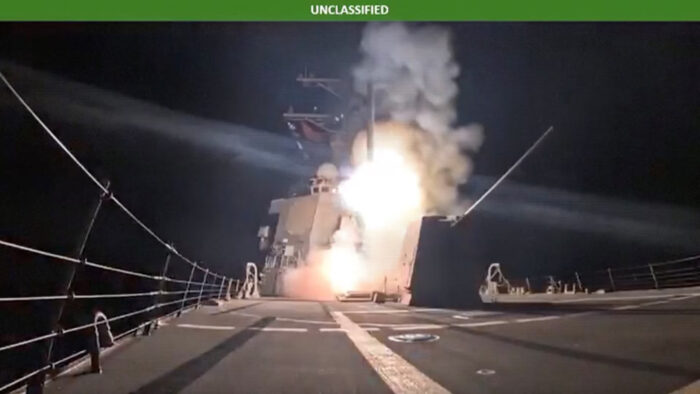
On December 25, 2025, the United States launched precision airstrikes against camps of Islamic State-affiliated militants in Sokoto State, northwest Nigeria — a move ordered by President Donald Trump and carried out with apparent coordination with Nigeria’s government. U.S. military officials stated the operation was in response to the persistent threat posed by extremist violence in the region and at Nigeria’s request, marking a significant escalation of American involvement in West Africa’s ongoing security crises.
A Shift in the U.S. Counterterrorism Footprint in Africa
For decades, the U.S. has supported Nigerian and regional forces through training, logistics, intelligence sharing, and advisory roles rather than direct combat missions on Nigerian soil. The Christmas Day strikes represent a watershed moment: American weaponry and command were used in overt kinetic action in support of Nigeria’s security challenges. This is as significant as previous U.S. operations in Niger, Somalia, and the Sahel, but politically more sensitive given Nigeria’s size, population, and complex internal dynamics.
By framing the strike as a response to alleged attacks on civilians — particularly Christians — Washington underscored humanitarian logic, but the narrative also reflected domestic political calculations and concerns about extremist groups gaining footholds beyond traditional theaters like Iraq or Syria.
Implications for U.S.–Nigeria Relations
1. Stronger Security Cooperation — If Carefully Managed
The Nigerian government publicly emphasized that the airstrike was conducted with its approval and intelligence cooperation, a necessary prerequisite for any offensive that respects sovereignty and prevents diplomatic blowback. Nigeria’s foreign ministry described the action as part of “ongoing structured cooperation consistent with international law.”
This could deepen long-term military ties — including intelligence sharing, joint planning, and expanded training — which are essential for both countries to combat violent extremist organizations that neither can defeat alone. For Nigeria, grappling with insurgencies by Boko Haram, Islamic State affiliates like the Lakurawa, and other armed groups, such cooperation offers much-needed resources and momentum in a long, grinding war.
2. Sovereignty and Domestic Backlash Risks
However, there’s a fine line between cooperation and perception of external interference. Some Nigerian critics — civil society groups, clerics, and political commentators — fear that even coordinated U.S. military action could be seen domestically as undermining Nigeria’s sovereignty. Such perceptions are especially risky in a country with deep ethno-religious divides and a history of suspicion toward foreign powers.
Business Insider Africa
The U.S. will need to tread carefully: emphasizing joint decision-making, transparent objectives, and a clear exit strategy to reassure Nigerians that strikes enhance — rather than replace — domestic efforts.
3. Narrative and Sectarian Sensitivities
The U.S. leadership’s initial framing of the strikes in religious terms — particularly highlighting violence against Christians — sparked debate. Analysts caution that religiously charged rhetoric in a country where Muslims and Christians both suffer at the hands of extremists may fuel internal tensions rather than promote unity against common threats.
Nigerian authorities have sought to defuse such narratives, stressing that the violence affects all communities and emphasizing Nigeria’s commitment to protecting all its citizens irrespective of faith.
Broader Regional and Strategic Considerations
1. U.S. Role in the Sahel and West Africa
The Sokoto strike arrives amid a broader evolution of U.S. policy in Africa, where instability has spread in the wake of French and European drawdowns in the Sahel and as jihadist groups exploit governance vacuums across borders. A more assertive U.S. posture could help fill strategic gaps, but it also risks entangling Washington in yet another protracted counter-insurgency.
Council on Foreign Relations
2. The Fight Against Islamic State Affiliates
The militants targeted in this operation include factions tied to the Islamic State — groups that have carved out de facto control in parts of Nigeria’s northwestern borderlands, undermining Abuja’s authority and spreading fear among civilians. Strikes might disrupt these groups temporarily, but without robust ground pressure and political solutions, airpower alone is unlikely to end the threat.
3. Regional Security Partnerships
Beyond Nigeria, effective counterterrorism demands stronger regional cooperation with neighboring states — many of which are themselves beset by insurgencies and political instability. U.S. engagement could catalyze multilateral efforts through ECOWAS, the African Union, and joint task forces like the MNJTF (Multinational Joint Task Force), but this requires diplomatic as well as military investment.
Council on Foreign Relations
Conclusion: Opportunity With Caution
The December 2025 strikes mark a pivotal moment in U.S.–Nigeria security relations — offering the potential to deepen cooperation against shared threats and signal U.S. commitment to African stability. But this opportunity comes with risks: navigating Nigeria’s sovereignty concerns, avoiding sectarian missteps, and ensuring that military action complements broader political, economic, and governance reforms.
If managed thoughtfully, this episode could strengthen a partnership that benefits both nations and contributes to regional security. If handled clumsily, it may fuel domestic resentment and inadvertently complicate Nigeria’s own fragile security landscape.