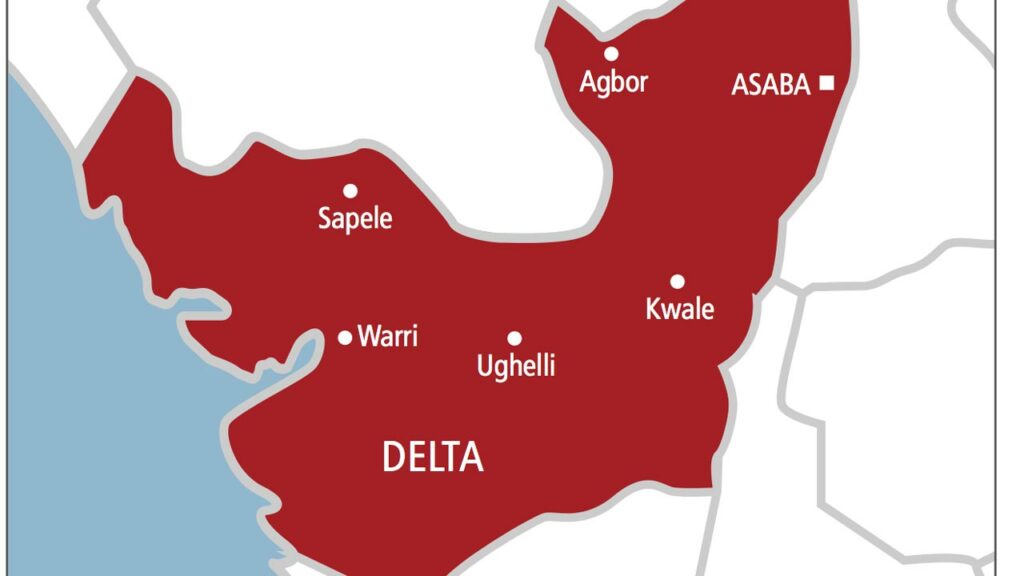
It was meant to be a day of colour, rhythm and ancestral pride. Instead, Thursday, March 19, 2026, has been etched into the collective memory of Ozoro Kingdom as a day of fear, violation and institutional reckoning — a day when a cultural celebration allegedly devolved into what residents now describe, in hushed tones, as a “festival of rape.”
In Oramudu Quarters, the epicentre of the chaos, the lines between festivity and criminality blurred with terrifying speed. What should have been an expression of heritage became, according to multiple accounts, a coordinated assault on women — a breakdown not only of order, but of the very cultural codes the festival was meant to uphold.
Traditionally, the Ozoro festival is not an impromptu affair. It is announced, structured, and governed by clearly communicated rules — including restrictions that often require women and girls to remain indoors during specific hours. But this time, something critical was missing. There was no formal notification. No clear guidance. No community-wide sensitisation, The Guardian investigation revealed.
That vacuum may have proved deadly.
Unaware of any restrictions — or even that a festival had been sanctioned — women and girls went about their normal routines. Students of Delta State University, Ozoro, and visitors unfamiliar with local customs found themselves suddenly trapped in a hostile environment they neither anticipated nor understood. What followed, according to eyewitness accounts and emerging evidence, was not random. It was systematic.
Authorities and community leaders are increasingly rejecting the notion that this was a cultural mishap. Instead, early findings suggest that criminal elements exploited the ambiguity surrounding the festival to carry out targeted acts of sexual violence. Women were allegedly stripped, molested, assaulted — some raped — in broad daylight or under the thin veil of festivity.
The brazenness of the attacks has shocked even long-time residents.
“This was not culture. This was criminality wearing a cultural mask,” a local civil society advocate said, echoing a sentiment now widely shared across Delta State.
The backlash was swift. Chairman of Isoko North Local Government Area, Godwin Ogorugba, did not mince words. He described the acts as “inhumane, barbaric and totally unacceptable,” warning that no tradition could justify the degradation of women.
More significantly, he revealed that the festival itself may not have had official approval — a disclosure that raises troubling questions about how such a large-scale event unfolded without oversight.
He says the incident “sacrilegious and barbaric. This is a condemnable and wicked act for the youths to hide under any form of guise to molest and assault harmless and innocent women during the kingdom’s festival. The act is unacceptable, shameful, and completely at variance with the customs and values of the Isoko people”.
“This is very disappointing. Painfully, there was no official notification or approval from the community leadership for any such festival, making the incident even more troubling.
“It is disheartening that young people, who should represent the pride and future of our society, would engage in acts that degrade and violate the dignity of women, our mothers and sisters for just no cause.
“No cultural or social activity justifies, any form of molestation, harassment, intimidation and misconduct. Every individual, indigene or non-indigenes deserves to be treated with respect, dignity and protected under the law. Not under my watch should this barbaric take place.
“We are a peaceful and accommodating people, but we will not allow a few individuals to tarnish the image of our land. This unfortunate incident must serve as a lesson, and such behaviour will not be condoned under any circumstances,”
At the state level, the reaction was equally forceful. Commissioner for Works (Rural Roads) and Public Information, Charles Aniagwu, condemned the assaults, calling them “barbaric” and insisting that no group should be allowed to weaponize culture as a shield for crime.
Aniagwu said “The Delta State Government strongly condemns the harassment of ladies and the reported cases of rape during the Ozoro Festival.
“Such barbaric acts are totally unacceptable and have no place in our society. We are calling on the Police and other security agencies to fish out the perpetrators of these heinous acts and bring them to justice. No individual or group should be allowed to hide under the guise of a festival to perpetrate criminal activities.”
Law enforcement response has been one of the most decisive aspects of the aftermath. The Delta State Police Command confirmed the arrest of 15 suspects, including an alleged chief organiser, Omorede Sunday, alongside several others identified as Samson Atukpodo, Steven Ovie, Ugbevo Samson, Afoke Akporobaro, Evidence Oguname, and six others; through video footage and intelligence gathering.
Police spokesperson Bright Edafe described the incident as “alarming, disgusting and embarrassing,” stressing that it bears no resemblance to any legitimate cultural practice.
The arrests followed a directive from Commissioner of Police Aina Adesola, who deployed the Command’s Special Assignment Team (CP-SAT) to unravel what appears to be a premeditated exploitation of a public gathering.
Preliminary findings, according to the Police, point clearly to “criminal elements who took advantage of the situation to perpetrate sexual violence.”
Yet beneath the arrests and official condemnations lies a more troubling reality — one that may ultimately define the true scale of the tragedy. Sexual violence in Nigeria remains vastly underreported. Stigma. Fear. Distrust of authorities. These forces conspire to keep victims silent.
In Ozoro, however, that silence is already palpable. How many women were assaulted? How many will come forward? How many will carry the trauma in silence? For now, no one can say. Not just for those who allegedly carried out the assaults, but for the systemic failures that allowed the situation to escalate — the absence of communication, the lack of preventive security, and the ease with which cultural narratives can be manipulated.
For now, there is outrage. There are arrests. There are promises of justice. But history suggests that outrage fades. What remains to be seen is whether Ozoro — and indeed Delta State — will confront the deeper issues exposed by this incident: Weak community governance structures. Poor festival regulation. Endemic gender-based violence, and a justice system that victims often do not trust.
Until those issues are addressed, the danger is clear: What happened in Ozoro may not be an aberration. It may be a warning. And as investigations continue, one fact stands unchallenged: March 19, 2026, was not just a day of crime. It was a day that forced a community — and a state — to look in the mirror.
The Guardian